A test under real-world conditions, with validated data and demonstrable benefits
During the Proof of Concept (PoC) at Bosch, Manukai was able to successfully test its AI solution in a highly automated manufacturing environment – even though the automotive supplier has perfected its processes over decades.
The Bosch Group from Germany is not only one of the world's leading automotive suppliers, but also a key supporter of the startup scene, particularly in the areas of artificial intelligence, deep tech, and digitalization. This makes them the ideal partner for Manukai, a spin-off from ETH Zurich, founded with the goal of making production smarter.
They connected through the Bosch Startup Harbour program:
"We were offered the opportunity to conduct a proof of concept with Bosch. For us, this was a perfect opportunity to demonstrate that our solution can be successfully deployed in mass production to optimize existing programs,"
explains Dr. Pascal Weber, CEO of Manukai.
Thousands of components manufactured daily with the highest precision
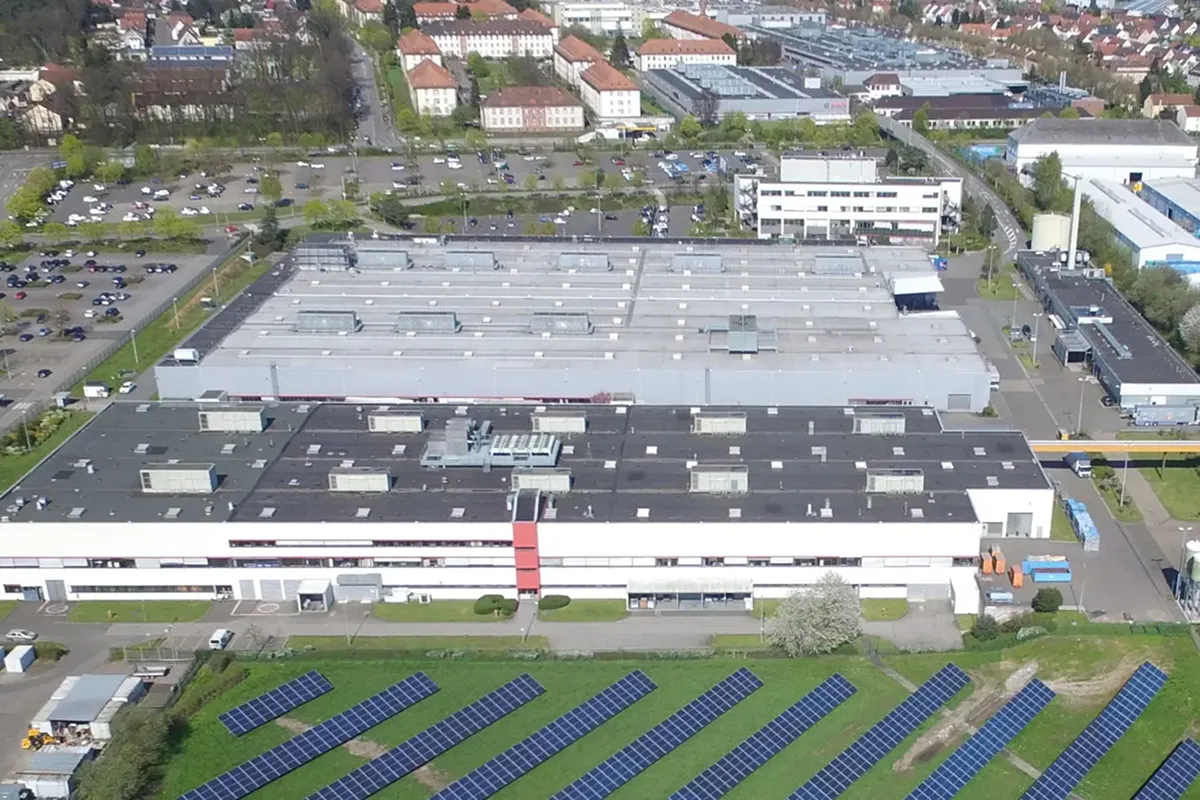
At its Homburg site, Robert Bosch GmbH manufactures injector holders for common rail systems for a wide variety of customers and models – thousands every day, with the highest precision: long deep-hole drilling is one of the core competencies here.
"These are components that we have been manufacturing in a wide variety of versions for over 20 years – for different pressure levels and in different materials,"
says Christian Scholl, who heads the competence center.
This diversity also means that each variant requires new programming of the CNC machines. The programmers in the factories have many years of experience and an extremely high level of knowledge about the process. They know when and where something similar has been programmed before, then access existing code steps and adapt them for the new component.
Focus: Production optimization
Manukai operates on the premise that everything manufactured in a factory is repetitive to some degree, whether it involves machining holes, pockets, threads, contours, or specific surfaces. Using artificial intelligence, Manukai identifies similar geometries and compares them across all past projects to standardize, optimize, and automate aspects of production.
“We saw the potential inherent in Manukai’s solution. That’s why we decided to analyze the optimization potential in large-scale production and program comparison.”
says Christian Scholl.
And Pascal Weber adds:
“For us, the collaboration was an ideal proof of concept: Identifying potential for improvement in such a mature process as Bosch’s would be the best proof of the performance of our solution.”
Independence of individuals
Manukai addresses another key challenge in CNC programming: the strong dependence on individual experts and the lack of a standardized, data-driven framework for process optimization. At Bosch Power Solutions, program maintenance is also largely manual, and the performance of different programs cannot be automatically compared.
The central question was therefore: How can Manukai's AI-powered technology capture and systematize the know-how of NC programmers, thus enabling continuous improvement? This would result from automating programming and thereby realizing significant cost and efficiency gains in machining processes. The study therefore aimed to investigate what optimizations could be achieved along key production parameters – particularly with regard to increasing process speed.
Comparison of geometric properties reveals potential savings
Unlike conventional programs, Manukai searches not only the code text but also the 3D data and geometric properties, such as a specific hole. The variations are compared, and the program suggests not only optimization possibilities but also directly generates the corresponding CNC or CAM code, which can be used immediately.
As part of the proof of concept (PoC), Bosch provided a reference part with a high production volume. Manukai then analyzed its 3D data from approximately 20 years of production. The highest feed rate for a process-reliable part was identified as the optimal production parameter.
This revealed where there was potential for optimization in Bosch's NC programming processes in order to reduce processing time and standardize programs.
The proof of concept thus made it clear that even in a nearly perfected environment there is still room for fine-tuning through AI-supported NC programming and that – if the solution is implemented – cost savings could also be realized in the long term.
“Of course, we have conducted A/B comparisons in the past. But with Manukai, we were able to do this systematically and comprehensively for the first time,”
says Christian Scholl, satisfied.
Efficiency thanks to artificial intelligence and human experience
Dr. Pascal Weber from Manukai is also pleased with the successful collaboration:
“We were able to demonstrate that our AI-supported NC programming technology can be seamlessly integrated into practice. Beyond immediate productivity and cost advantages, it creates a scalable framework for process standardization, knowledge sharing, and cross-site optimization.”
Manukai is not a replacement, but a complement to human intelligence and expertise: Experienced programmers recognize the potential based on the compared codes in order to optimize recurring processes and thereby make production more efficient overall.
What is Manukai?
Manukai addresses a key problem in machining: repetitive work steps in CNC programming. Based on historical data, the AI solution suggests proven machining strategies, adapts them to the new part, and automatically creates the corresponding operations.
This allows programming times to be significantly reduced, especially for variants and parts with geometrically similar features. Analyzing previously completed orders makes it possible to optimize CNC programs in terms of part quality and efficiency.
Another advantage is standardization: Manukai acts as a knowledge database, making implicit know-how and experience accessible to everyone in the company – a massive accelerator, for example, when training new employees.
Manukai runs locally, integrates seamlessly into existing software environments, is machine-independent, and can be implemented in a few hours.
While this project focused on optimizing existing NC programs, Manukai is also applicable to creating new NC and CAM programs.